



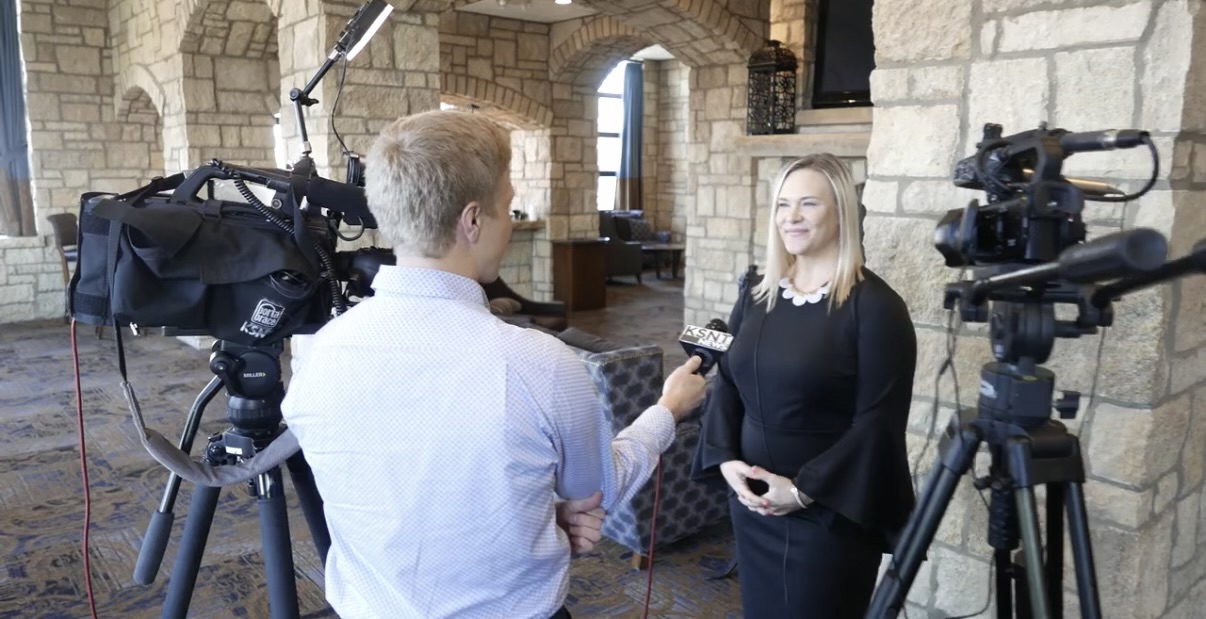
Earned Media: How to assist media clients with live news and other TV appearances
As a video agency, we can step up and advocate for our clients when they have a TV news appearance to leverage that opportunity. So whether you are a field producer working for our small business, or a public relations professional just getting your feet wet, here's some institutional knowledge you can pick up quickly. Most importantly, think ahead and be proactive.
Pre-Production Strategy for Media Clients Appearing on Live Television
In the world of public relations, multimedia marketing, and video production, a successful television appearance rarely happens by accident. Whether your client is a non-profit executive, a local business owner, or a community advocate, preparation before stepping into a newsroom is often the difference between a memorable interview and a missed opportunity. Strong pre-production planning helps clients communicate their message clearly while also protecting the priorities of the organization they represent.
A strong title for the professional managing this process is often “media strategist” or “field producer,” though in many modern workflows the role overlaps with communications advisor, social media manager, and brand advocate. Regardless of the title, this person must arrive fully prepared before the cameras ever roll. Beyond rehearsing talking points, the media strategist should already understand the client’s website structure, fundraising links, downloadable resources, social media channels, and any visual assets that could support the story online afterward. If a newsroom producer asks for b-roll footage, historical photos, drone shots, logos, or supporting graphics, those materials should already be organized and ready to distribute immediately.
The media strategist should also anticipate audience curiosity. Are there emotional visuals connected to the story? Is there a compelling statistic that could become a lower-third graphic on-screen? Is there an interactive webpage where viewers can donate, register, or learn more? The best media professionals think beyond the television segment itself and prepare for how the story may evolve digitally afterward. Think ahead.
How Media Coaches Help Clients Deliver Better Interviews
Experienced field producers and media strategists often function as media coaches behind the scenes. Their role is not to script robotic answers but to help clients stay organized under pressure. This preparation process resembles traditional video production pre-production meetings where messaging themes, sound bites, and emotional objectives are discussed in advance.
One important lesson for new multimedia professionals is understanding newsroom culture. Journalists are not marketing representatives for your client. In most cases, it is neither realistic nor professionally appropriate to expect reporters to provide every question ahead of time. While some talk shows or community segments may offer a loose interview outline, many reporters prefer spontaneity to maintain journalistic credibility. Because of this, clients should rehearse adaptable talking points rather than memorized scripts. The goal is confidence, not perfection.
Media advocates should also help interview subjects understand timing. Television operates on strict schedules. A client who rambles may unintentionally crowd out the organization’s most important call to action. During rehearsals, communications professionals should help clients learn how to answer concisely while naturally transitioning toward the organization’s primary mission, fundraising initiative, or service offering.
For example, if a non-profit executive is promoting both a small fundraiser and a larger statewide initiative, the interview subject should already understand which message deserves the majority of the airtime. A three-minute television segment disappears quickly. The client must be mentally prepared to prioritize the larger organizational mission instead of getting distracted by smaller talking points that carry less long-term impact.
What is evergreen video content?
Remember: Television and video production is an active art. If your interview subject is speaking in past tense, it's old news.
Therefore, identify which portions of the story will not expire 24 hours from now. For example, don't promote a Saturday golf tournament too heavily if the TV appearance happens on Friday night. Instead, focus on which elements of the company (or non-profit) mission will continue long after the TV appearance airs!

Landscape panorama of dark misty fir forest in the fog in the rainy weather
Live Production Tips for Capturing Behind-the-Scenes Media Content
Once the live production environment begins, multimedia professionals shift into a completely different role. At this stage, they are no longer just strategists. They become content gatherers, brand protectors, and real-time observers. This is where experienced field producers separate themselves from beginners.
One of the most valuable practices during a newsroom visit is capturing a wide variety of behind-the-scenes photography and social media content. These visuals help extend the value of a television appearance long after the segment airs. Photographs showing the client interacting with anchors, reporters, producers, or camera operators help communicate credibility and professionalism to future audiences online.
For better or for worse, those behind-the-scenes shots also position your client as the influencer. The interview subject is being treated like a public figure whose expertise is actively being sought by the television station itself. Audiences subconsciously interpret these visuals as validation. The client is not chasing attention; rather, the media outlet is soliciting their expertise. In today’s social media environment, that perceived authority can become incredibly valuable for brand positioning, fundraising credibility, and long-term audience trust.
Professionals should prioritize a mixture of shots. Wide shots showing the newsroom environment can create excitement and authority. Medium two-shots featuring the client and reporter help establish authenticity. Close-up images of studio lights, cameras, microphones, teleprompters, and production equipment add visual texture to future social media posts and marketing campaigns.
At the same time, smart media managers understand the importance of balancing visibility and neutrality. While it is beneficial to show that the client was interviewed in a professional media environment, marketers should avoid making the content feel like a commercial for a specific television station. Capturing alternate angles that minimize prominent station branding can help portray the client as a respected expert who participates in broader media conversations rather than appearing exclusively affiliated with one outlet.
How to advocate for video production clients who also appear in TV news
Stephanie Burns interviews with a TV reporter during a conference
Documentary-Style Video Production in Pennsylvania
Why Behind-the-Scenes Newsroom Content Builds Brand Authority
Modern audiences are fascinated by access. Behind-the-scenes media content creates a sense of exclusivity and legitimacy that standard marketing photos often cannot replicate. A simple image of a client seated under studio lighting or speaking with a reporter beside a professional camera setup instantly communicates credibility.
This type of content is especially valuable across LinkedIn, Instagram, Facebook, and organizational newsletters. A single television appearance can generate dozens of secondary marketing assets when documented correctly. New multimedia professionals sometimes underestimate how valuable these supporting visuals become over time.
For example, a non-profit executive preparing for a fundraising campaign can later reuse these newsroom photos in sponsorship presentations, annual reports, donor outreach campaigns, and future press releases. Likewise, business owners can use similar behind-the-scenes imagery to reinforce their expertise and visibility within their industry.
The strongest field producers understand that live production is not just about the television segment itself. It is also about creating a library of evergreen marketing assets that continue working for the client long after the interview concludes.
How Media Strategists Protect Clients During Live Interviews
Another overlooked responsibility during live production is active listening. While capturing photographs and supporting content, media strategists must also remain mentally engaged with the interview itself. In live television situations especially, there may be moments where clarification becomes necessary after the segment concludes.
Perhaps a statistic was misstated. Maybe an event date was accidentally skipped. Sometimes a website URL or fundraising detail needs reinforcement for digital audiences afterward. Experienced communications professionals monitor these details carefully because they know the television segment is only one piece of the broader communication strategy.
This balancing act requires situational awareness. The best field producers are simultaneously documenting the experience, monitoring messaging accuracy, and observing opportunities for future follow-up content. That combination of technical awareness and strategic thinking is what transforms a basic social media assistant into a trusted media advocate.
Post-Production Strategies After a Television Interview Airs
Many inexperienced marketers believe the job ends once the interview concludes. In reality, post-production advocacy may be the most important phase of the entire process. The digital afterlife of a television segment often reaches far more people than the original live broadcast itself.
After the interview, communications professionals should proactively ask newsroom staff how the segment will be distributed online. Will the full interview appear on the station website? Will excerpts be uploaded to social media? Is there a YouTube version planned? These details matter tremendously because online visibility determines how much long-term value the organization receives from the appearance.
Unfortunately, newsroom websites often prioritize speed and efficiency. Producers may upload only a short clip or omit the interview entirely unless someone politely advocates for the client. Professional media coordinators understand the importance of respectfully following up to encourage publication of the full segment whenever possible.
Equally important is ensuring the published article or segment includes proper hyperlinks to the client’s organization, fundraising page, campaign website, or service landing page. Visibility without conversion opportunities limits marketing effectiveness. Whether representing a non-profit or a for-profit company, the objective is ultimately to guide viewers toward meaningful action.
Why Full-Length Interview Publishing Matters for Marketing ROI
Long-form interview publishing creates tremendous long-term marketing value. A three-minute television appearance can become website content, embedded social media video, donor outreach material, YouTube content, newsletter material, and future portfolio content for both the client and the media strategist.
This is especially important in an era where organizations increasingly repurpose content across multiple platforms. A television interview no longer lives for only one morning broadcast. It can continue generating awareness for months or even years if archived properly online.
For multimedia professionals entering the marketing and communications industries, this broader perspective is essential. The role is not simply to “show up” at the newsroom. The role is to strategically maximize every phase of the experience — before, during, and after production.
The most successful media advocates understand that client experience is built through preparation, attentiveness, professionalism, and persistence. When executed correctly, a single television appearance becomes far more than a news segment. It becomes an integrated marketing opportunity capable of strengthening credibility, expanding digital reach, and reinforcing the client’s overall brand story.